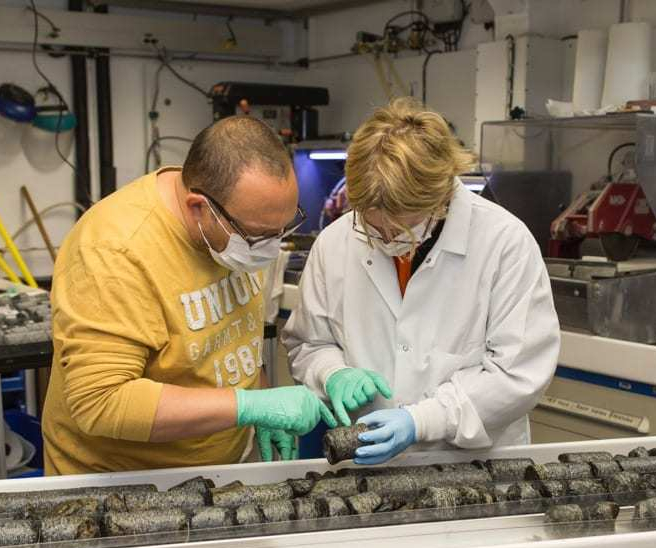
Every time we think we have determined the limits to the existence of life on earth, we discover a new species of extremorphiles flourishing in conditions that were ruled out as inhabitable. The latest example being the discovery of microbes almost half a mile under the bedrock of Indian Ocean. “The lower ocean crust is one of the last frontiers of the exploration for life on Earth,” microbiologist Virginia Edgcomb from Woods Hole Oceanographic Institution (WHOI) told Eos. It is challenging for microbiota that live in marine subsurface sediments or igneous basement to obtain sufficient carbon resources and energy to support growth or to meet basal power requirements during periods of resource scarcity.
Thus, the discoveries, made as part of the International Ocean Discovery Program (IODP) which studies samples of rock and sediment taken from beneath the seafloor, were not expected at the least. Under normal circumstances, the program works towards investigating the historic climate records preserved there, but in this case an international team of scientists found evidence of life not just surviving but thriving in conditions that were earlier deemed unlivable.
In general, research on marine sedimentation involves the study of deposition, composition, and classification of organic and inorganic materials found on the ocean bed. Samples of such materials are thoroughly examined aboard research vessels or in shore-based laboratories, where investigators analyze the size and shape of constituent particles, determine chemical properties such as pH, and identify and categorize the minerals and organisms present.
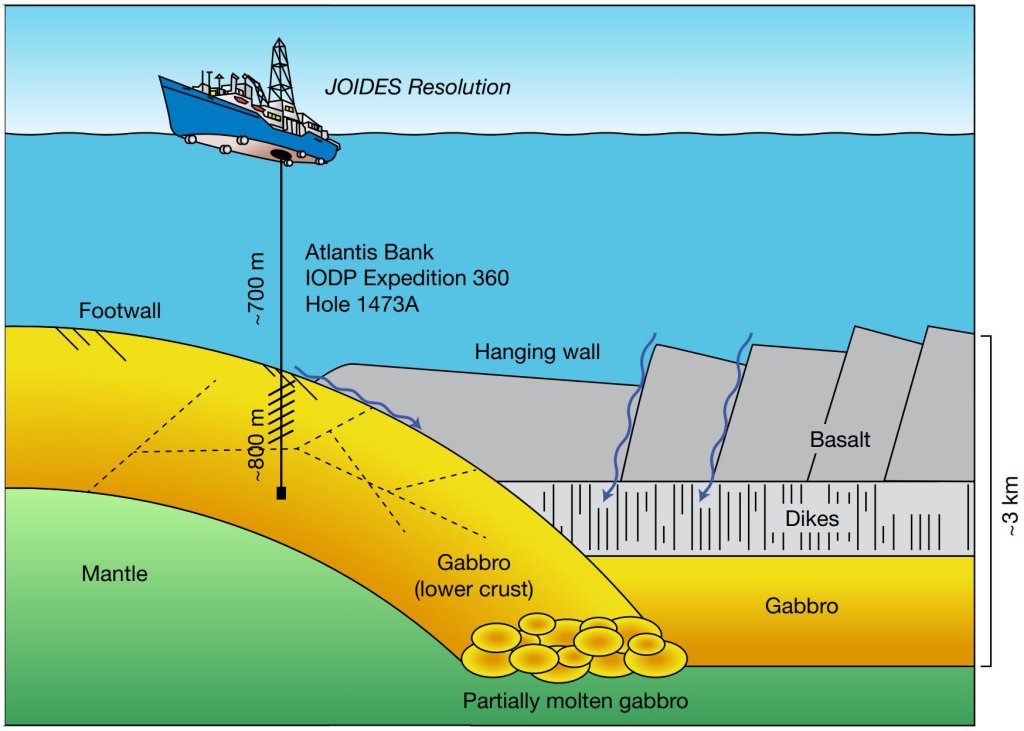
Edgcomb, marine geologist Jiangtao Li from Tongji University in China and colleagues analysed rock samples drilled from Atlantis Bank, an undersea ridge in the Indian Ocean. Here, rising magma along a faultline pushed up the layers of earth above it, exposing the lower crust to the ocean above, allowing scientists easier access to a geological layer usually locked beneath upper-crust basalts.
The researchers scoured rock samples taken from the lower oceanic crust, searching for genetic material and organic molecules, in order to prove the existence of life under the ocean floor. When they finally found it, cell counts were performed and samples were then grown in petri dishes. Overall, a relatively small but diverse population of microbes living as deep as 2,600 feet (792 m) below the ocean floor were discovered through this process.
“They are tiny, around 1 micrometer,” says Jason Sylvan, an author of the study. “We can’t tell the age, but assume them to be currently extant, so not necessarily old, but in an environment that is extreme and subsurface. We believe this is the first research to show active microbes in this environment and to be able to describe their lifestyles using such a broad array of data streams.”
Though these microbes are thriving in the depths, the conditions are not very supportive of life. Lack of sunlight, unavailability of food, limited space even for microbes made the researchers curious as to how were these microbes surviving. So, they analyzed the gene expression of the messenger RNA they found. They found that some of the organisms are able to store carbon in their cells, allowing them to stockpile reserves for when they needed it. Others turn to nitrogen and sulfur for energy. Some may be able to recycle amino acids. And some invest in breaking down tough compounds to get at the carbon locked away inside.
The team says that the study reveals just how hardy microbial life can be, even in environments that might be presumed to be too hostile. After all, past studies have shown that life can be found in the hottest, driest deserts and in the coldest polar ice and snow. And this persistence has implications far beyond our own planet.
“This environment and lower oceanic crust is comprised largely of types of material called gabbro and peridotite, and these allow for some chemical reactions that were likely present on early Earth and also on other planets where water and volcanic rocks interact,” says Sylvan. “It also shows us that microbial life is likely to persist wherever there is room for it and that it will evolve ways to live in those difficult environments.”
The research was published in the journal Nature.
 Theories and Insights