What is OCD?
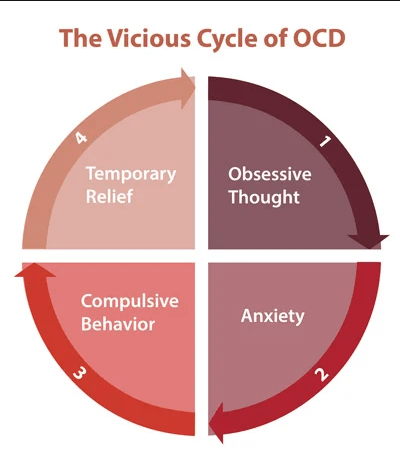
Obsessive-compulsive disorder (OCD) features a pattern of unwanted thoughts and fears (obsessions) that lead you to do repetitive behaviors (compulsions). These obsessions and compulsions tend to interfere with daily activities and cause significant misery. Trying to ignore or stop your obsessions tends to increase your distress and anxiety. Ultimately, you give in to the compulsion to perform such acts in order to ease your stress, but instead of ceasing, the thoughts recur. This leads to more ritualistic behavior — the vicious cycle of OCD.
OCD isn’t about habits like biting your nails or thinking negative thoughts. A compulsive habit might be to wash your hands seven times after touching something that could be dirty. Although you may not want to think/do these things, you feel powerless to stop.
Even though, everyone has habits or thoughts that can be repetitive, people with OCD have thoughts or actions that:
- Take up at least an hour a day
- Are uncontrollable and exhausting
- Aren’t pleasant
- Interfere even with simple tasks of daily life
How many types are themes of OCD classified into?
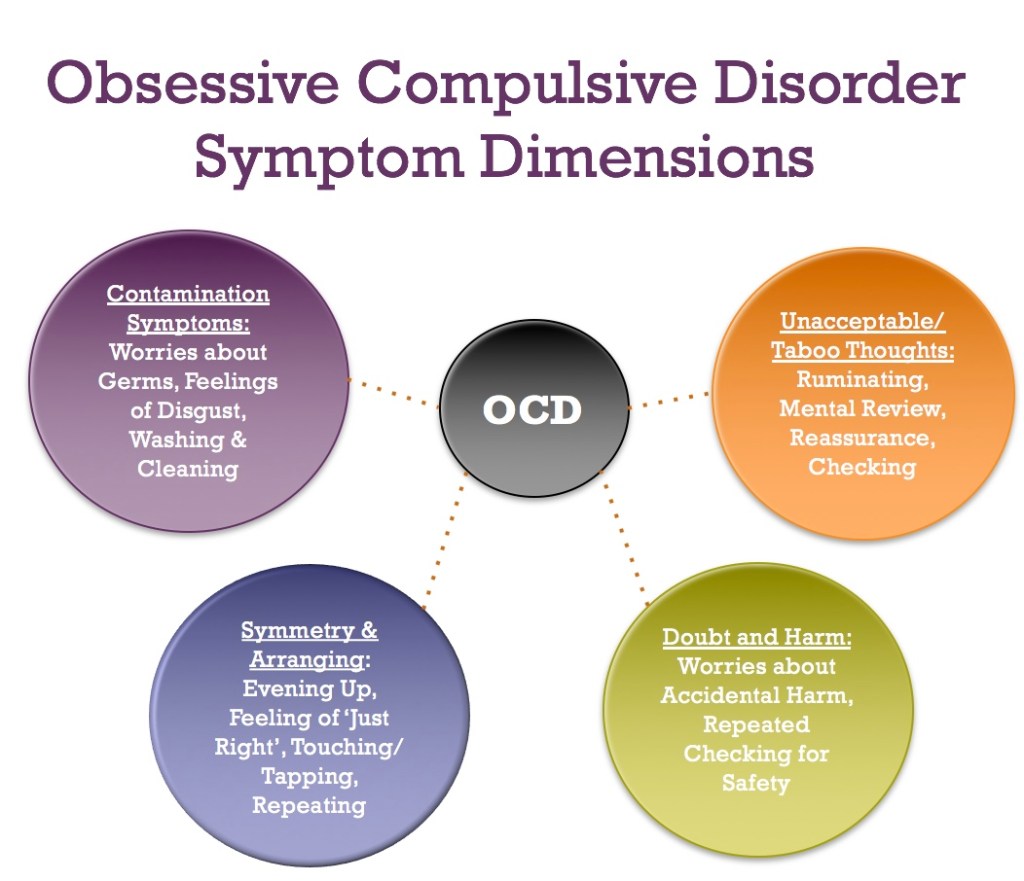
Obsessions often have themes to them, such as:
- Fear of contamination or dirt
- Doubting and having difficulty tolerating uncertainty (fear of losing control)
- Needing things orderly and symmetrical
- Aggressive or horrific thoughts about losing control and harming yourself or others
- Unwanted thoughts, including aggression, on sexual or religious subjects, among others.
Examples of obsession signs and symptoms include:
- Fear of being contaminated by touching objects others have been in contact with
- Doubts that you’ve locked the door or turned off the stove
- Intense stress when objects aren’t orderly or facing a certain way
- Images of driving your car into a crowd of people
- Thoughts about shouting obscenities or acting inappropriately in public
- Unpleasant sexual images
- Avoidance of situations that can trigger obsessions, such as shaking hands
Compulsion symptoms
OCD compulsions are repetitive behaviors that you feel driven to perform. These repetitive behaviors or mental acts are meant to reduce anxiety related to your obsessions or prevent something bad from happening. However, engaging in the compulsions brings no pleasure and may offer only a temporary relief from anxiety.
You may make up rules or rituals to follow that help control your anxiety when you’re having obsessive thoughts. These compulsions are excessive and often are not realistically related to the problem they’re intended to fix.
As with obsessions, compulsions typically have themes, such as:
- Washing and cleaning
- Checking
- Counting
- Orderliness
- Following a strict routine
- Demanding reassurance
Examples of compulsion signs and symptoms include:
- Hand-washing until your skin becomes raw and dry
- Checking doors repeatedly to make sure they’re locked
- Checking the stove repeatedly to make sure it’s off
- Counting in certain patterns
- Silently repeating a prayer, word or phrase
- Arranging your bottles or pictures (anything for the matter) to face the same way
When are you are at risk of developing OCD?
OCD usually surfaces in the teen or young adult years, but there is a possibility for it to manifesting in childhood itself. Symptoms usually begin gradually and tend to vary in severity throughout life. The types of obsessions and compulsions you experience can also mutate over time. Symptoms generally worsen with increse in stress. OCD, usually considered a lifelong disorder, usually has mild to moderate symptoms but can become so severe and time-consuming that it becomes disabling.
When to see a doctor
There’s a difference between being a perfectionist — someone who requires flawless results or performance, for example — and having OCD. OCD thoughts aren’t simply excessive worries about real problems in your life or liking to have things clean or arranged in a specific way.
If your obsessions and compulsions are affecting your quality of life, see your doctor or mental health professional.
What are its causes?
The cause of obsessive-compulsive disorder isn’t fully understood. Main theories include:
- Biology. OCD may be a result of changes in your body’s own natural chemistry or brain functions.
- Genetics. OCD may have a genetic component, but specific genes have yet to be identified.
- Psychology. Obsessive fears and compulsive behaviors can be learned from watching family members or gradually learned over time.
Any risk factors?
Factors that may increase the risk of developing or triggering obsessive-compulsive disorder include:
- Family history. Having parents or other family members with the disorder can increase your risk of developing OCD.
- Stressful life events. If you’ve experienced traumatic or stressful events, your risk may increase. This reaction may, for some reason, trigger the intrusive thoughts, rituals and emotional distress characteristic of OCD.
- Other mental health disorders. OCD may be related to other mental health disorders, such as anxiety disorders, depression, substance abuse or tic disorders.
What complications are witnessed in an OCD-patient?
Problems resulting from obsessive-compulsive disorder may include, among others:
- Excessive time spent engaging in ritualistic behaviors
- Health issues, such as contact dermatitis from frequent hand-washing
- Difficulty attending work, school or social activities
- Troubled relationships
- Overall poor quality of life
- Suicidal thoughts and behavior
Preventions and diagnosis
- There’s no sure way to prevent obsessive-compulsive disorder. However, getting treatment as soon as possible may help prevent OCD from worsening and disrupting activities and your daily routine.
- Your doctor may do a physical exam and blood tests to make sure something else isn’t causing your symptoms. They will also talk to you about your feelings, thoughts, and habits.
OCD Treatment
There’s no cure for OCD. But you may be able to manage how your symptoms affect your life.
Treatments include:
- Psychotherapy. Cognitive behavioral therapy can help change your thinking patterns. In a form called exposure and response prevention, your doctor will put you in a situation designed to create anxiety or set off compulsions. You’ll learn to lessen and then stop your OCD thoughts or actions.
- Relaxation. Simple things like meditation, yoga, and massage can help with stressful OCD symptoms.
- Medication. Psychiatric drugs called selective serotonin re-uptake inhibitors help many people control obsessions and compulsions. They might take 2 to 4 months to start working. Common ones include citalopram (Celexa), escitalopram (Lexapro), fluoxetine (Prozac), fluvoxamine, paroxetine (Paxil), and sertraline (Zoloft). If you still have symptoms, your doctor might give you antipsychotic drugs like aripiprazole (Abilify) or risperidone (Risperdal). (source: webMD)
- Neuromodulation. In rare cases, when therapy and medication aren’t making enough of a difference, your doctor might talk to you about devices that change the electrical activity in a certain area of your brain. One kind, transcranial magnetic stimulation, is FDA-approved for OCD treatment. It uses magnetic fields to stimulate nerve cells. A more complicated procedure, deep brain stimulation, uses electrodes that are implanted in your head.
OCD-Related Conditions
Some separate conditions are similar to OCD. They involve obsessions with things like:Continue Reading Below
- Your looks (body dysmorphic disorder)
- Collecting, arranging, or ordering things (hoarding disorder)
- Pulling out/eating your hair (trichotillomania)
- Picking at your skin (excoriation)
- Physical illness (hypochondriasis)
- Body odor or how you smell (olfactory reference syndrome)
 Theories and Insights